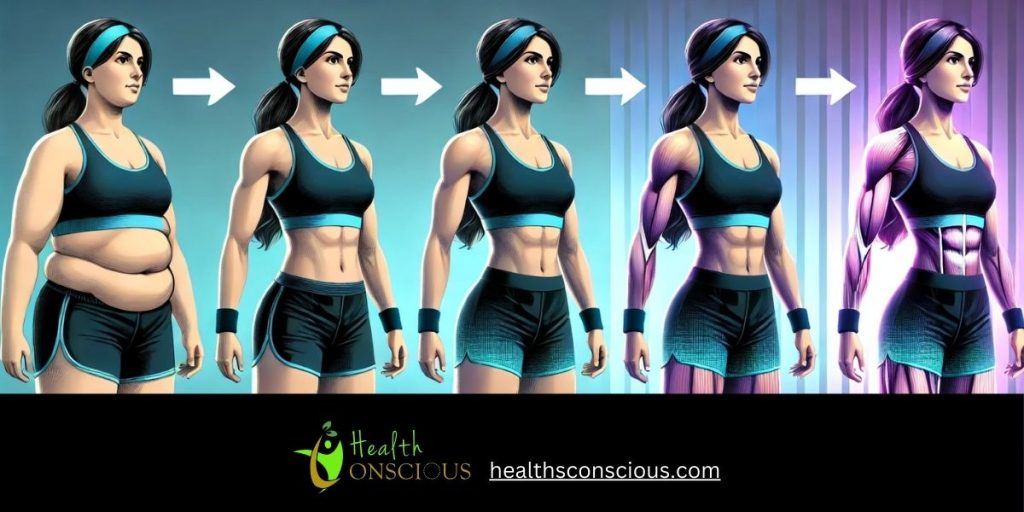

Body recomposition, also known as “body recomp” or “recomping,” involves a combination of activities, diets, and lifestyles that simultaneously reduce excessive body fat and build healthy muscles.
A stronger body recomposition female can be achieved by incorporating a nutrient-dense diet, consistent strength training, understanding and managing hormonal influences, and ensuring adequate recovery.
Many women are shifting their focus to celebrate strength gains and overall progress, rather than solely fixating on typical weight loss. In this detailed guide, we uncover the most effective body recomposition workout plans and diets for women and explore how to achieve successful body recomposition.
What is Body Recomposition?
Body recomposition can be understood as changing or balancing the ratio of fat and muscle in the body.
So, unlike typical weight loss, body recomp focuses on both fat loss and muscle gain simultaneously.
This not only results in a lean and aesthetically pleasing physique but also boosts your strength, metabolism, and overall health.
Understanding Body Recomposition Female
To understand “how to body recomposition female,” it’s crucial to have a solid understanding of their hormonal fluctuations, menstrual cycles, and varying body types. Additionally, women naturally carry a higher percentage of body fat compared to men. These factors play a significant role in muscle building and fat loss in the female body. Therefore, achieving body recomposition female requires a tailored approach for sustainable results.
A consistent strength training program, a nutrient-rich diet, and mindful attention to recovery, when combined, can lead to optimized goals.
How to Body Recomposition Female? Let’s Start Your Journey
Unlike traditional weight loss, which primarily targets reducing overall body weight, body recomposition enhances strength, metabolism, and overall fitness. Here’s how you can get started:
1. Set a Clear Goal
Define what you want to achieve. Do you want to lose fat, build muscle, or both? Setting realistic goals helps maintain motivation and track progress effectively.
2. Strength Training is Key
Lifting weights or engaging in resistance exercises at least 3-5 times per week is essential. Focus on compound movements like squats, deadlifts, and push-ups to target multiple muscle groups efficiently.
3. Optimize Your Nutrition
Your diet should be balanced and nutrient-dense. Ensure you consume:
- Protein: Supports muscle repair and growth (chicken, fish, tofu, eggs, lentils).
- Healthy Fats: Essential for hormone regulation (avocados, nuts, olive oil).
- Complex Carbs: Provide energy for workouts (quinoa, brown rice, sweet potatoes). A slight calorie deficit with high protein intake is ideal for fat loss without losing muscle.
4. Stay Active Beyond Workouts
Daily movement, like walking, yoga, or light cardio, enhances fat loss and overall well-being without interfering with muscle growth.
5. Prioritize Recovery
Sleep, hydration, and stress management are crucial. Aim for 7-9 hours of quality sleep per night and stay hydrated to optimize muscle recovery.
6. Track Your Progress
Since weight scales may not show true changes, track progress through:
- Body Measurements (waist, hips, arms, thighs)
- Progress Photos (every 2-3 weeks)
- Strength Improvements (lifting heavier weights over time)
7. Be Patient and Stay Consistent
Results don’t happen overnight. It takes weeks or months to see visible changes, so remain consistent with workouts and nutrition.
By following these steps, you’ll be on the right path to successful body recomposition, achieving a leaner, stronger, and healthier physique. To stay consistent you can follow 75 soft challenge rules that will boost your physical and mental health.
A Sample Body Recomposition Workout Plan: Effective Exercises for Females
Achieving body recomposition—simultaneously building muscle and losing fat—requires a well-structured workout plan for better body recomposition women. Drawing inspiration from effective programs, here’s a comprehensive guide to top exercises and a sample workout plan designed for females.
Top Exercises for Female Body Recomposition
Incorporating compound movements that engage multiple muscle groups is essential for efficient workouts. Here are some of the most effective body recomposition exercises:
- Squats: Target the quadriceps, hamstrings, glutes, and core, promoting lower body strength.
- Deadlifts: Engage the posterior chain, including the hamstrings, glutes, lower back, and core, enhancing overall strength.
- Bench Press: Focus on the chest, shoulders, and triceps, contributing to upper body development.
- Overhead Press: Strengthen the shoulders, upper chest, and triceps, improving upper body stability.
- Pull-Ups or Lat Pulldowns: Develop the back, biceps, and shoulders, essential for upper body balance.
- Lunges: Work the quadriceps, hamstrings, and glutes, enhancing unilateral leg strength and stability.
- Planks: Activate the core muscles, supporting overall stability and posture.
- HIIT Cardio Exercises: High-intensity interval Training (HIIT) includes sprinting, burpees, jump squats, and mountain climbers, boosting metabolism and accelerating fat loss.
Sample Weekly Workout Plan
This plan integrates the above exercises into a balanced routine:
Day 1: Lower Body Strength
- Squats: 3 sets of 8-10 reps
- Deadlifts: 3 sets of 8-10 reps
- Lunges: 3 sets of 12 reps per leg
- Calf Raises: 3 sets of 15 reps
Day 2: Upper Body Push
- Bench Press: 3 sets of 8-10 reps
- Overhead Press: 3 sets of 8-10 reps
- Tricep Dips: 3 sets of 10-12 reps
- Lateral Raises: 3 sets of 12 reps
Day 3: Rest or Active Recovery
- Light activities like yoga, stretching, or walking
Day 4: Upper Body Pull
- Pull-Ups: 3 sets of 8-10 reps
- Bent-Over Rows: 3 sets of 8-10 reps
- Bicep Curls: 3 sets of 10-12 reps
- Face Pulls: 3 sets of 12 reps
Day 5: Full Body Functional Training
- Kettlebell Swings: 3 sets of 15 reps
- Goblet Squats: 3 sets of 12 reps
- Push-Ups: 3 sets of 10-15 reps
- Planks: 3 sets of 30-60 seconds
Day 6: Rest or Active Recovery
- Engage in light physical activities
Day 7: Cardiovascular Training
- High-Intensity Interval Training (HIIT): 20-30 minutes
- Steady-State Cardio: 30-45 minutes (e.g., jogging, cycling)
A Healthy Body Recomposition Diet for Females
- Increase Protein Intake (0.7–1.0g per pound): Protein is essential for muscle growth and fat loss. Include lean meats, fish, eggs, dairy, tofu, and lentils in your meals.
- Choose Smart Carbs for Energy: Opt for whole grains, vegetables, and legumes to fuel workouts and recovery while keeping blood sugar stable.
- Incorporate Healthy Fats: Fats support hormone balance and overall health. Opt for foods including avocados, seeds & nuts, olive oil, and fatty fish.
- Focus on Meal Timing: Eat a mix of protein and carbs before and after workouts to enhance performance, recovery, and muscle retention.
- Maintain a Sustainable Caloric Approach: A slight caloric deficit (10-15%) promotes fat loss while building muscle. Avoid extreme diets—focus on long-term, balanced eating.
Tips to Track Your Body Recomposition Progress
Tracking your body’s recomposition progress goes beyond just watching the number on the scale. Here are the most effective ways to monitor your transformation:
- Body Measurements: Track inches lost or gained in key areas like waist, hips, and thighs every 2-4 weeks.
- Progress Photos: Take front, side, and back photos under consistent lighting and posture every few weeks.
- Strength Gains: Record improvements in lifting weights, endurance, and overall performance.
- Body Fat Percentage: Use smart scales or get professional assessments (DEXA scan, calipers) for a more accurate picture.
- Clothing Fit: Notice how your clothes fit differently as muscle builds and fat decreases.
- Energy & Mood Levels: A well-balanced recomposition plan enhances energy, mood, and overall well-being.
How Does Body Recomposition Work in Females?
Body recomposition in females involves gaining lean muscle while simultaneously losing fat. This process differs from traditional weight loss as it focuses on body composition rather than just reducing the number on the scale.
- Muscle Growth: Strength training stimulates muscle growth, improving metabolism.
- Fat Reduction: A balanced diet with a slight calorie deficit encourages fat loss without muscle loss.
- Hormonal Considerations: Women’s hormones, such as estrogen, impact muscle-building potential and fat distribution.
- Recovery & Rest: Proper sleep and stress management are critical for maximizing results.
How Long Does Body Recomposition Take?
The time it takes for body recomposition varies based on consistency, training intensity, and diet. Most individuals notice visible changes within 8-12 weeks, though complete transformation may take several months.
- Initial Changes: Within the first few weeks, you may feel stronger and notice slight differences in how your clothes fit.
- Visible Progress: Around the 8-12 week mark, muscle definition improves, and fat loss becomes noticeable.
- Long-Term Results: Sustainable recomposition takes 3-6 months or longer, depending on adherence to training and diet.
- Hormonal Influence: Women may experience fluctuations due to menstrual cycles, pregnancy, or menopause, affecting body recomposition female speed.
Consistency, proper nutrition, and progressive overload in workouts play a crucial role in determining how quickly results appear.
Key Mistakes to Avoid in Female Body Recomposition
Avoid these common pitfalls to ensure steady progress:
- Over-Reliance on Cardio: Strength training is crucial for muscle growth and fat loss.
- Severe Caloric Restriction: Drastic dieting can lead to muscle loss and metabolic slowdown.
- Skipping Protein Intake: Protein is vital for muscle repair and overall recomposition.
- Neglecting Strength Progression: Not increasing weights over time limits muscle development.
- Inconsistent Tracking: Relying solely on the scale without measuring progress through other metrics.
- Poor Recovery Practices: Overtraining without proper rest leads to stagnation.
Summary
Body recomposition female is a gradual process that requires a balance of strength training, proper nutrition, and mindful recovery. Unlike traditional weight loss, recomposition focuses on fat loss and muscle gain for a toned, healthier physique. Tracking progress through various methods, avoiding common mistakes, and maintaining consistency is key to achieving long-term success.
FAQs
What is the best workout routine for body recomposition in females?
A combination of strength training (3-4 times a week) and HIIT or moderate cardio is ideal. Prioritizing progressive overload in weight training is key for muscle growth while maintaining a slight calorie deficit supports fat loss.
How much protein I can eat for my body recomposition?
Women aiming for body recomposition should consume 0.8 to 1.2 grams of protein per pound of body weight daily to support muscle growth and repair.
Can I do body recomposition at home?
Yes! Resistance bands, dumbbells, and bodyweight exercises like squats, push-ups, and lunges can effectively build muscle and burn fat.
Will I lose weight during body recomposition?
Not necessarily. Since you are gaining muscle while losing fat, the scale may stay the same or even increase slightly. Progress should be tracked through body measurements, photos, and strength improvements.
Can I achieve body recomposition without lifting heavy weights?
Yes, but some form of resistance training is essential. Lighter weights with higher repetitions or bodyweight exercises can still yield good results when performed with intensity.
How long does it take to see noticeable changes in my body’s recomposition journey?
Most people see noticeable differences within 8-12 weeks, but long-term transformation takes 3-6 months or more, depending on consistency and effort.
What role do hormones play in female body recomposition?
Hormones like estrogen and progesterone influence fat distribution, water retention, and muscle-building potential. Menstrual cycles, menopause, and stress hormones like cortisol can also impact progress.
Is it necessary to track calories for body recomposition?
While not mandatory, tracking macros and calories can help ensure you are eating enough protein and maintaining an appropriate calorie intake for your goals.
Should I prioritize strength training or cardio for body recomposition?
Strength training should be the priority since it helps build muscle and revs up metabolism. Cardio can be included but should not be the main focus.