
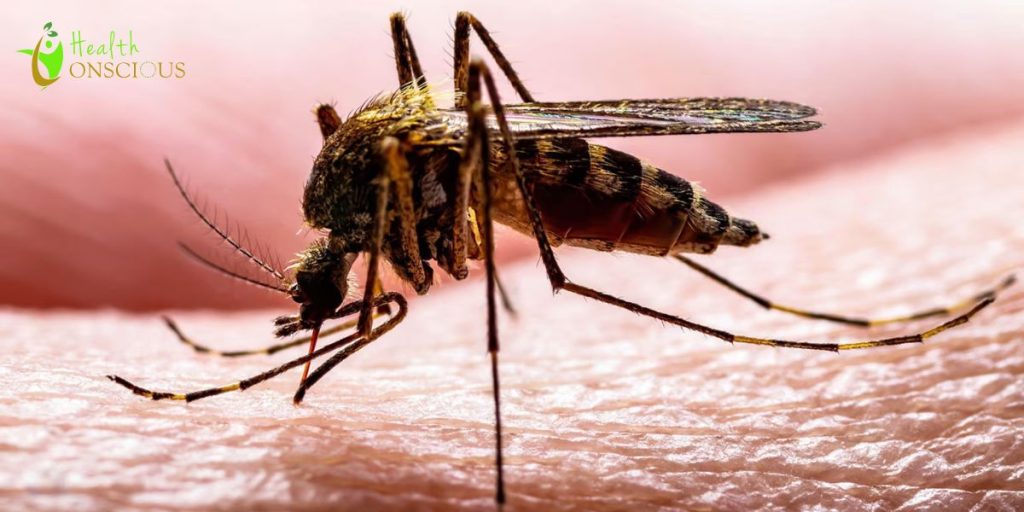

A recent DNA study has finally settled a long-standing biological debate, revealing that a particular mosquito species, long believed to have evolved in the London Underground, actually has roots that stretch much further back—to the Mediterranean.
The legend of this subterranean insect dates back to World War II. As Londoners took shelter from German bombing raids in Tube stations, they were relentlessly bitten by mosquitoes. In the decades that followed, scientists began to theorize that this unique population of pests might have adapted to the dark, confined environment, essentially evolving in situ (on site) within the city’s tunnel network.
The insect at the center of this story is the Northern House Mosquito, Culex pipiens. It exists in two forms that are visually identical but behave very differently. The first is Culex pipiens form pipiens, which primarily feeds on birds and thrives in open-air environments. The second is Culex pipiens form molestus (a name derived from the Latin for “obnoxious”), which readily bites humans and is known to flourish underground.
For years, some biologists strongly suspected that the molestus variant had uniquely evolved within the London Tube stations. This idea gained significant traction after a 1999 genetic study. According to Yuki Haba, a postdoctoral researcher at Columbia University and the lead author of the new research, that earlier theory became “really famous,” despite what he describes as “limited evidence” to support the claim of on-site evolution from above-ground populations.
To challenge this theory, Haba and his team analyzed the DNA sequences from hundreds of mosquitoes collected globally, including historic specimens alive during WWII. Their comprehensive analysis concluded that the molestus form did not rapidly evolve beneath the English capital. Instead, it possesses a significantly older history, pointing toward a Mediterranean origin.

Londoners rest inside an Underground station turned into an air raid shelter during 1940. (Photo: Bettmann Archive / Getty Images)
A Much Older Split: The True Evolutionary Timeline
The genetic analysis performed by Yuki Haba and his team indicates that the divergence between the bird-biting pipiens (aboveground) and the human-biting molestus (belowground) forms is far older than the myth suggests. Haba estimated the split could have occurred as far back as 10,000 years ago or as recently as 1,000 years ago, but the most likely timeframe is between 3,000 and 2,000 years ago.
“It’s a lot older than the London Tube, and it seems to have evolved around the Mediterranean region, particularly in the Middle Eastern region,” Haba confirmed.
Evolutionary analysis suggests that these ancestral molestus populations initially lived above ground. Haba noted that these populations then “gradually dispersed to other places of the world, including the London Underground.” This means the mosquitoes didn’t evolve in the Tube; they simply colonized it as part of a much broader migratory pattern.
Tracing the Migrant: An International Search for Samples
The researchers began their ambitious project to thoroughly examine the “London Underground mosquito” theory in 2018. To gain a comprehensive understanding of the species’ origin and genetic diversity, Haba described their sampling strategy: “we literally Googled Culex pipiens and emailed every author of every paper that we found about the mosquito, telling them we needed samples.”
After a multi-year effort involving thousands of emails, the team successfully amassed a collection of dead mosquitoes preserved in ethanol. These specimens came from over 200 sources in 50 different countries. Due to restrictions, the scientists couldn’t collect live mosquitoes directly from the London Tube. Instead, they relied on historical samples collected throughout the 1900s, which were preserved at the Natural History Museum in London and analyzed at the Wellcome Sanger Institute genomics research center.

London’s historic South Kensington Underground station — one of the oldest on the network — first opened in 1868. (Photo: Nicolas Economou / NurPhoto / Getty Images)
Expanding the Data and Pinpointing the Origin
To solidify their findings, the researchers combined their initial collection with additional mosquito samples from a separate study, raising the total number of insects examined to approximately 800. This robust sample set included 357 modern insects and 22 historical specimens.
The comprehensive genetic data led to a clear conclusion, as stated by Lindy McBride, the study’s senior author and an assistant professor of evolutionary genomics and neuroscience at Princeton University: “Our data shows that molestus is descended directly from pipiens populations that still thrive in the Mediterranean region.”
The team’s finding suggests the molestus form “evolved at Mediterranean latitudes, but probably in the Middle East, where it’s actually too arid for the bird-biting variant to exist,” McBride explained. This arid environment required a major behavioral shift. Around this same time, locals in the region were beginning to establish agricultural settlements with irrigation systems. McBride posits that these systems created stable, sheltered water sources, enabling mosquitoes to thrive in desert areas and eventually adapt to feeding on humans.
This new evolutionary timeline is supported by historical documentation. Naturalist Peter Forsskål originally identified molestus as a distinct species in Egypt in 1775. McBride notes that the species had likely existed for “a millennium or more” before this formal documentation. The mosquitoes’ move northward and underground occurred much later; the “first records from underground sites in Northern Europe date from around 1920,” which was well after it was initially documented in Southern Europe (Croatia and Italy) in the 1800s.
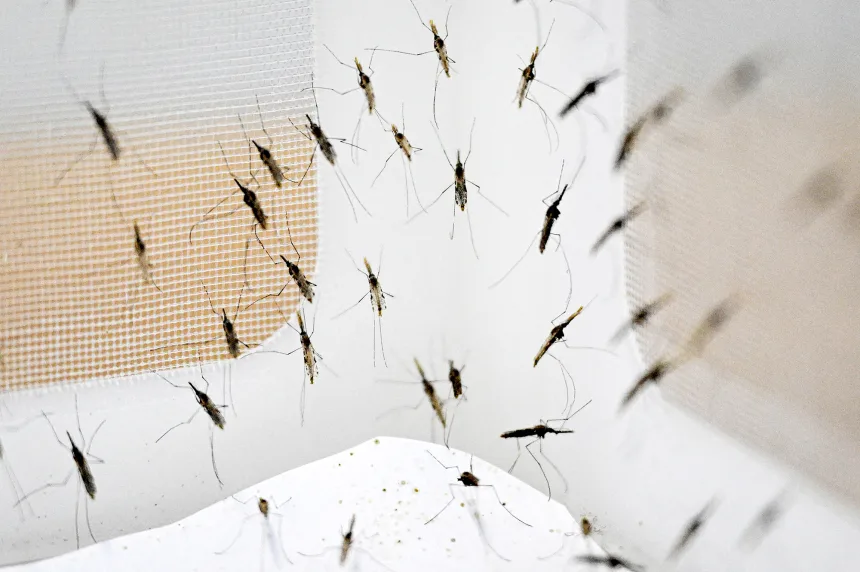
More than 3,000 mosquito species exist worldwide, found on every continent except Antarctica. (Photo: Tang Chhin Sothy / AFP / Getty Images)
Seeking Shelter: The Northern Migration and Adaptation
These detection patterns strongly suggest that the molestus mosquito only moved northward once it reached regions too cold to survive outdoors, and they sought shelter underground. “They would have been restricted to southern France, Italy, Greece, and Spain because they couldn’t withstand the harsh winter,” explained McBride. “Until there were underground structures to occupy during the winter, they couldn’t have gotten much further north than that.”
This capability for cold-weather survival is critical in the broader context of mosquito distribution. Mosquitoes have colonized all continents except Antarctica, with over 3,000 species documented worldwide. Intriguingly, a mosquito was recently discovered in Iceland—a place previously thought to be entirely mosquito-free due to its frigid temperatures.
Reflecting on the Science: Acknowledging New Data
While he was not involved in the latest research, Richard Nichols, a genetics professor at Queen Mary University of London, was a co-author of the 1999 paper that popularized the “London Underground mosquito” theory. In response to the new findings, Nichols stated via email that he finds the study “fantastic and compelling,” embracing the different conclusions as a normal part of the scientific process: “that’s how science works.”
Nichols elaborated that his 1999 study correctly showed that London’s underground mosquitoes were genetically distinct from the above-ground populations and possessed unique survival traits. These adaptations included the ability to complete their life cycle without a blood meal, the ability to bite non-selectively when given the chance, year-round breeding, and the capacity to mate successfully in cramped spaces.
He openly acknowledged that the new study, with its wider geographical sourcing and greater genetic diversity, reveals information unavailable two decades ago. “We interpreted these results to imply that some of the above-ground population had adapted to the London [Tube] system and became reproductively isolated from them,” he said, noting the technological limitations of the time. “Back then, we could easily survey 20 genes, not entire genomes.”
“The interpretation has changed, but our results remain unchanged,” Nichols concluded, affirming the foundational data of the 1999 study while accepting the updated evolutionary timeline.
Implications for Global Public Health
Cameron Webb, an associate professor of medical entomology at the University of Sydney and NSW Health Pathology in Australia, praised the new research as an “intriguing and thorough study” on the evolution of this globally relevant mosquito.
Webb, an expert who has studied molestus but wasn’t part of the project, pointed out in an email that this species is already “well known to be associated with subterranean habitats around the world, despite being frequently portrayed as having adapted specifically to the London Underground.” He clarified that the new study “shows the ancestral basis for this mosquito’s ability to take advantage of the London Underground.”
According to Webb, the entire “London Underground mosquito” story highlights the vital need to understand the biology of lesser-studied mosquitoes. This knowledge is crucial for determining how these pests exploit the changing urban landscape and the resulting challenges for public health and pest control. He warned, “We must make sure we don’t give mosquitoes more opportunities as our cities’ designs change to accommodate a changing climate.”
Read our latest health news here:


