
A new global study has found that chronic kidney disease (CKD) has become the ninth leading cause of death worldwide, highlighting a growing public health concern that demands urgent global attention.
Global Rise in Chronic Kidney Disease Cases
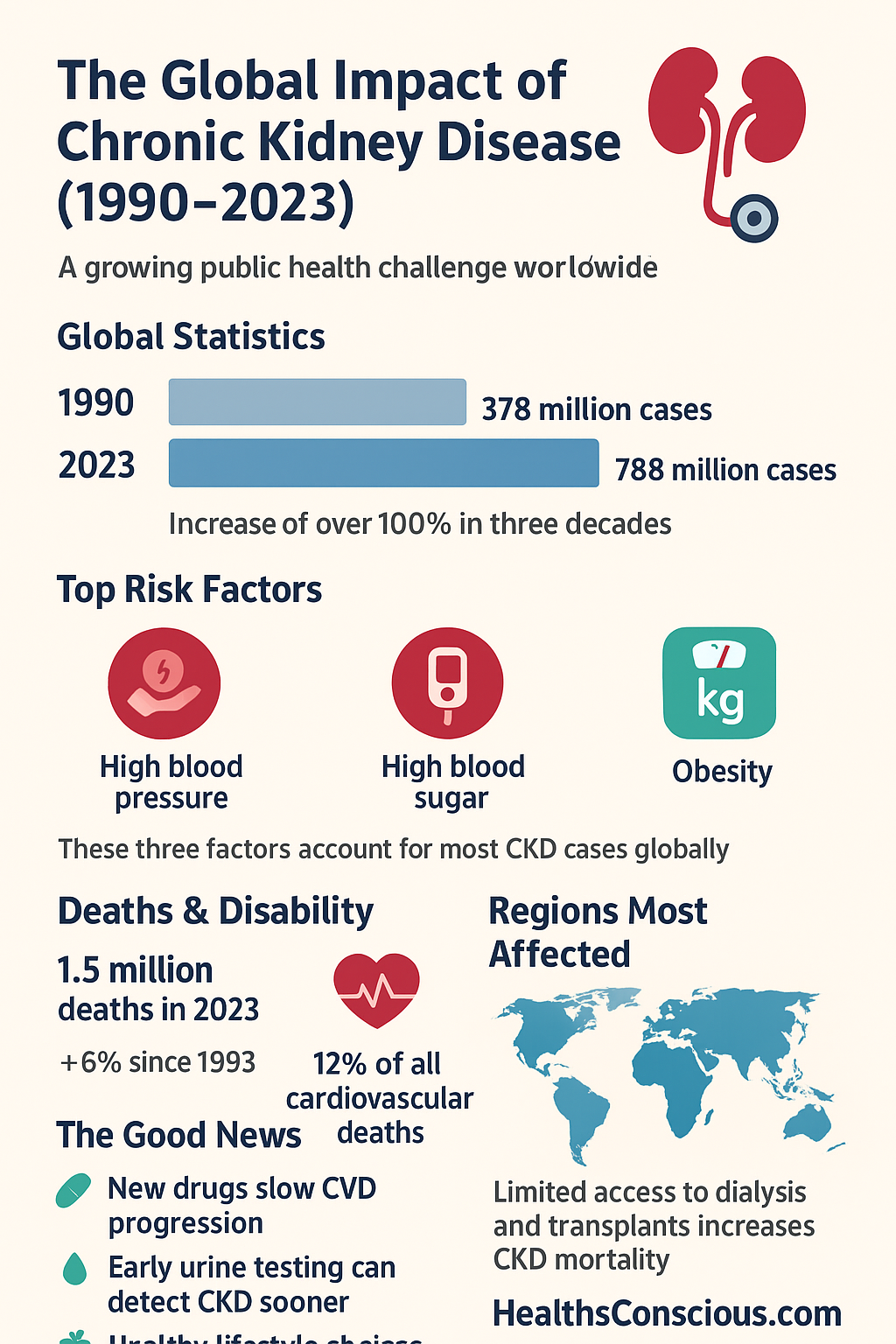
According to the analysis, the number of people living with impaired kidney function has nearly doubled in the past three decades—rising from 378 million in 1990 to 788 million in 2023. This sharp increase is largely attributed to the world’s aging and expanding population.
Researchers from NYU Langone Health, the University of Glasgow, and the Institute for Health Metrics and Evaluation (IHME) at the University of Washington conducted the study. The team examined the growing prevalence of CKD, a condition in which the kidneys gradually lose their ability to filter waste and excess fluid from the blood. While early stages of the disease often go unnoticed, severe cases can require dialysis, kidney replacement therapy, or even transplantation.
A Deadly and Worsening Health Crisis
The study revealed that 14% of adults worldwide are affected by chronic kidney disease. Alarmingly, the disease claimed 1.5 million lives in 2023, representing a 6% increase compared to 1993, even after adjusting for age differences across countries.
“Chronic kidney disease is common, deadly, and getting worse as a major public health issue,” said Dr. Josef Coresh, co-senior author of the study and head of NYU Langone’s Optimal Aging Institute. “These findings reinforce the need to recognize CKD as a critical global health priority, alongside cancer, heart disease, and mental health concerns.”
WHO Targets Kidney Disease in Global Health Goals
The World Health Organization (WHO) officially added chronic kidney disease to its global health agenda in May 2023, aiming to reduce premature deaths from noncommunicable diseases by one-third by 2030.
Dr. Coresh emphasized that understanding CKD’s demographic trends is key to combating it effectively. The findings, published on November 7 in The Lancet and presented at the American Society of Nephrology’s Kidney Week, represent the most comprehensive analysis of CKD in nearly a decade.
Findings from the Global Burden of Disease Study
The research was part of the Global Burden of Disease (GBD) 2023 project, a long-term effort to monitor health trends across nations. Using health records from 133 countries and data from over 2,200 studies, the team examined the prevalence, mortality, and disability linked to CKD.
The analysis found that reduced kidney function also increases the risk of heart disease, accounting for 12% of cardiovascular deaths worldwide. Additionally, CKD ranked as the 12th leading cause of disability globally in 2023. The main risk factors include high blood pressure, high blood sugar, and obesity (measured by BMI).
Early Detection Could Prevent Severe Outcomes
Most people with CKD are in the early stages, where timely lifestyle changes and medication can significantly slow disease progression and reduce the need for costly treatments such as dialysis or kidney transplants.
However, access to advanced treatments remains limited in regions like Sub-Saharan Africa, Southeast Asia, and Latin America, where healthcare resources are scarce.
“Chronic kidney disease is underdiagnosed and undertreated,” said Dr. Morgan Grams, co-lead author of the study and professor at the NYU Grossman School of Medicine. “We need wider urine testing and affordable access to treatment to catch it early and prevent serious complications.”
Promising Advances — But a Long Way to Go
Over the last five years, several new medications have been developed that help slow the progression of CKD while reducing the risk of heart attack, stroke, and heart failure. Yet, experts warn that widespread adoption and improvement in patient outcomes will take time.
Dr. Grams also cautioned that the true number of CKD cases may be even higher than the current estimates, as many people remain undiagnosed due to limited testing.
Key Takeaway
The findings underscore an urgent need for better screening, public awareness, and global healthcare investment in kidney health. With early diagnosis and access to modern therapies, millions of lives could be improved—and countless deaths prevented—in the decades to come.
Stay informed with our recent health articles: